One unified tech workflow, from planning to models at scale
Read the whole stack top to bottom, or jump straight to the part you need.

.jpg)
Data Collection
Transient flow methods combine nanoliter experimental control with gold-standard UHPLC detection, run automatically by our instrument orchestration software.
20×
faster yield data than traditional HTE
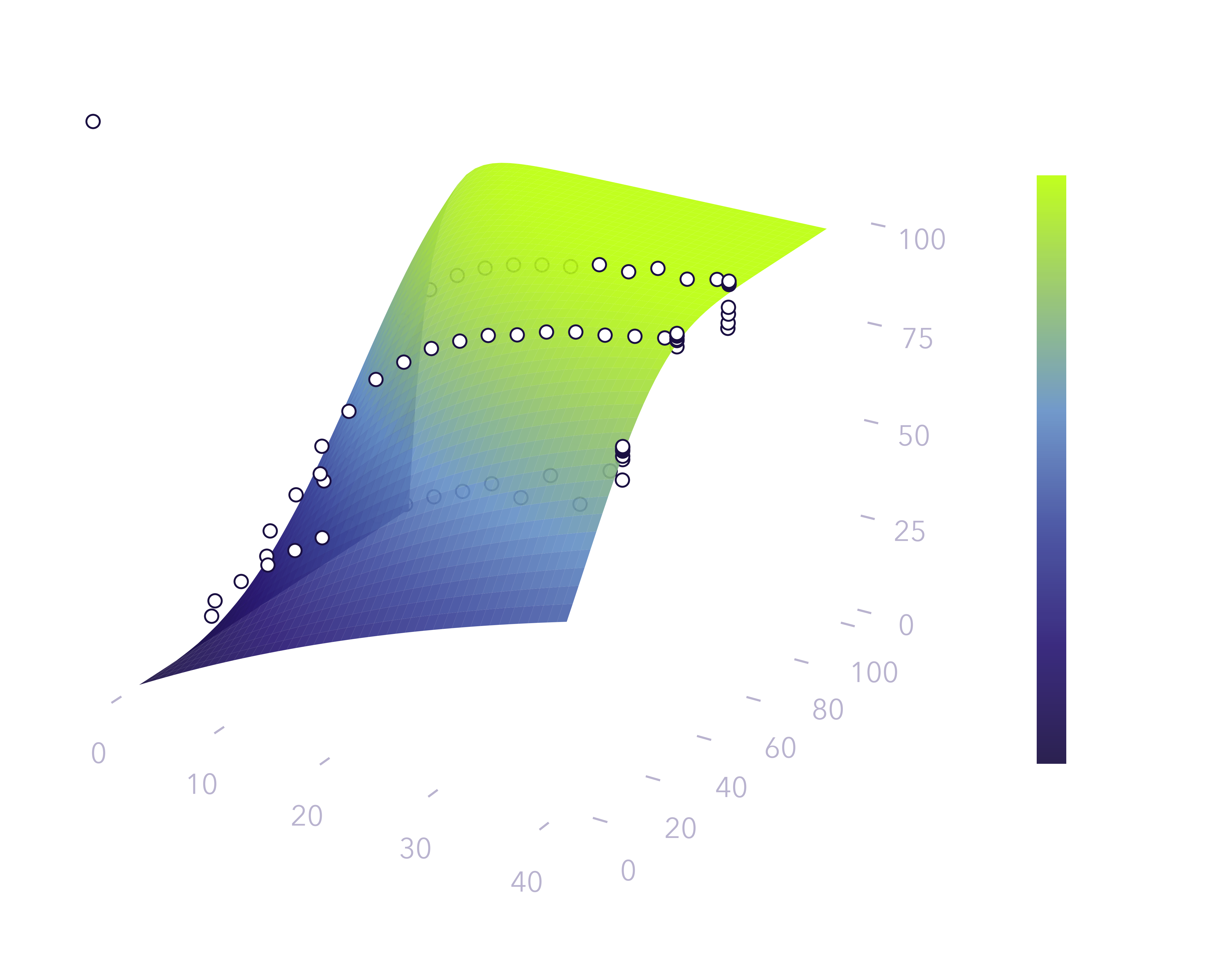
Breadth of Insight
That volume of high-quality data feeds a specialised chemical brain tuned to your problem, producing FAIR, machine-actionable data you can download or integrate via our API.
2 weeks
response surfaces, not 3 months
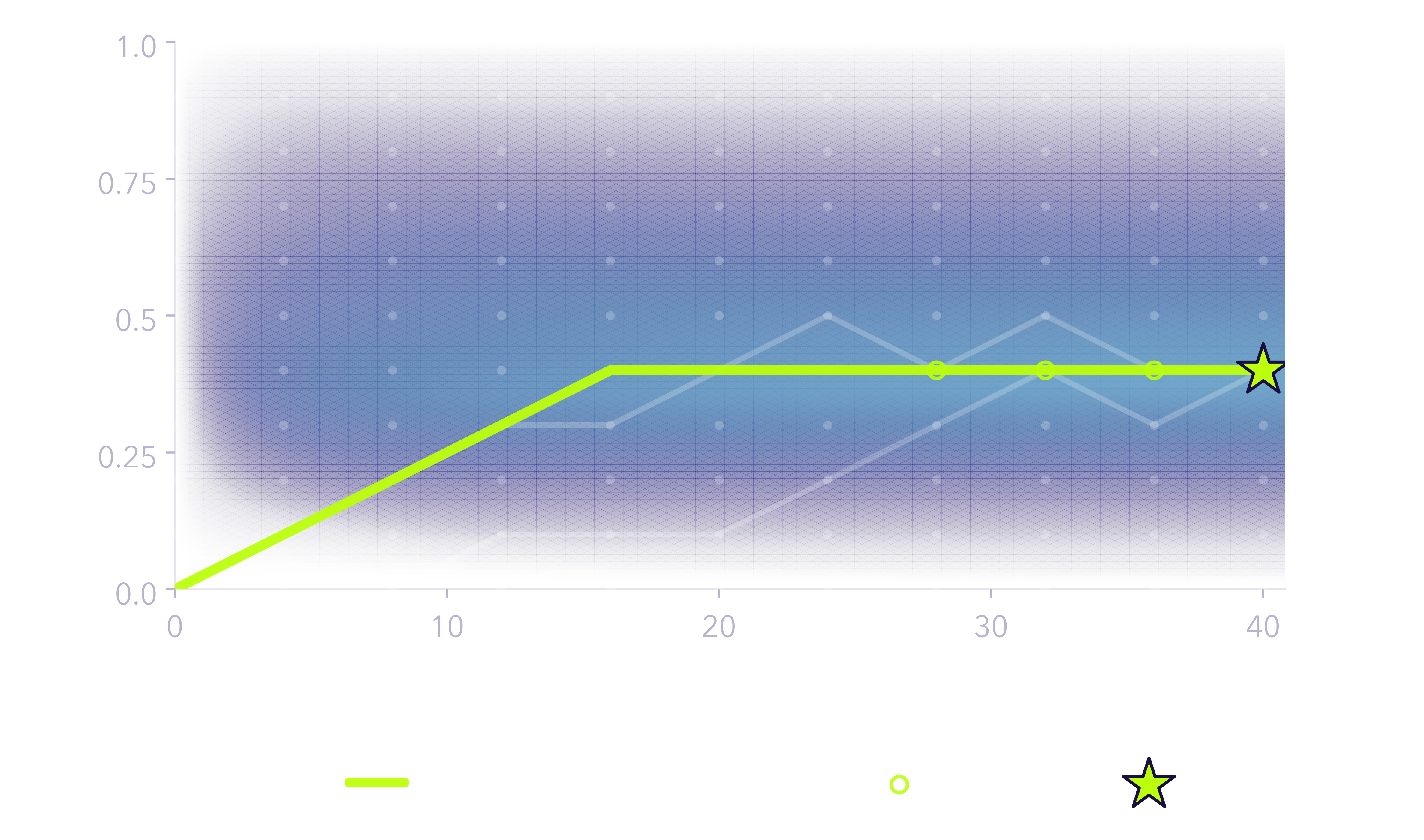
Planning
Bayesian ML plans the most effective next experiments, while human chemical intuition and your expert knowledge keep them safe and effective.
< half
the experiments, same information
Turn the data into models
This half stands on its own. It runs on the data from the cycle above, or on data you already have.
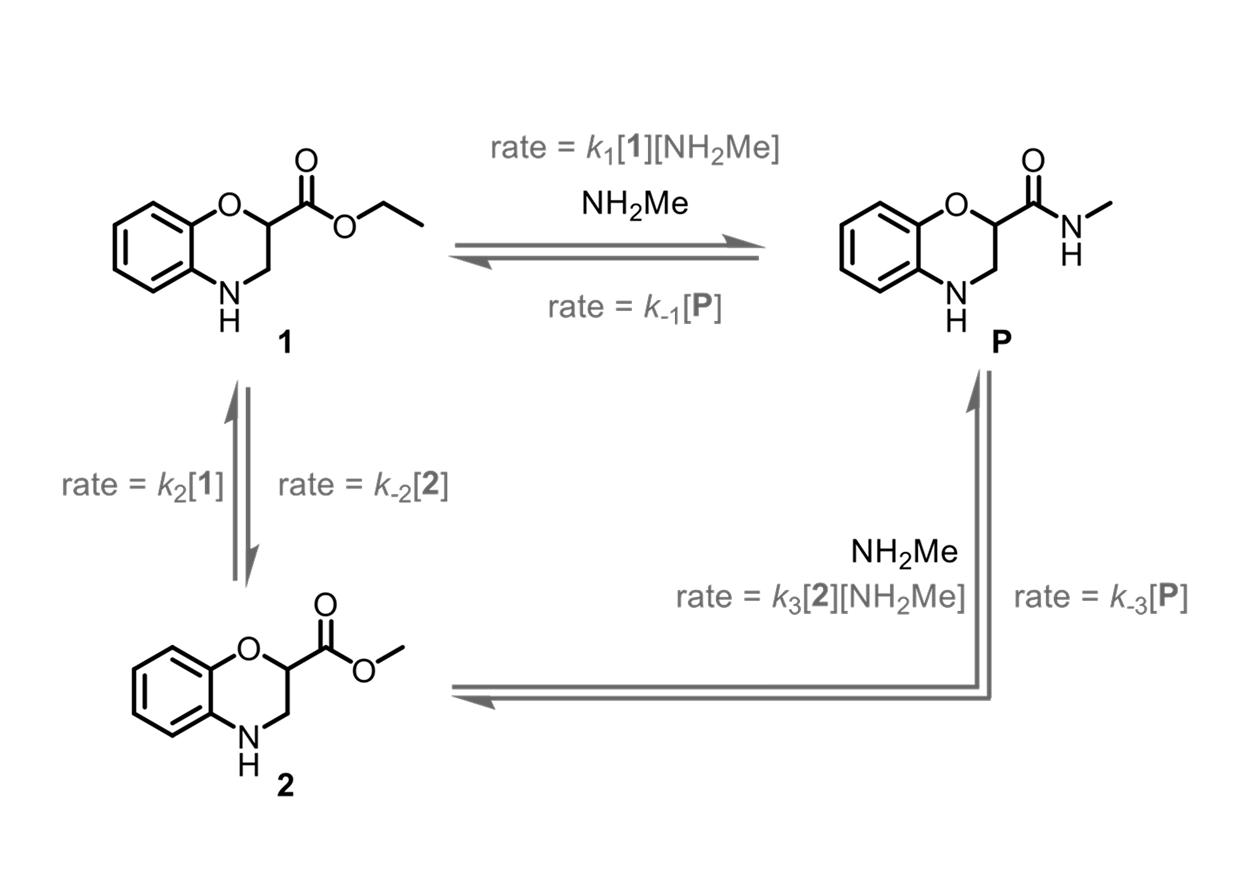
Automatic Mechanistic Kinetic Modeling
An additional insight offered is Automatic Mechanistic Kinetic Modeling. Get intrinsic scale-independent kinetic models, using data free from mass and heat transfer effects. Our AI-based approach is 50× faster than standard kinetic modelling workflows and more detailed. We provide quantitative activation energies and robust mechanistic models for understanding your reactions at any scale. We integrate natively with DynoChem/ReactionLab.
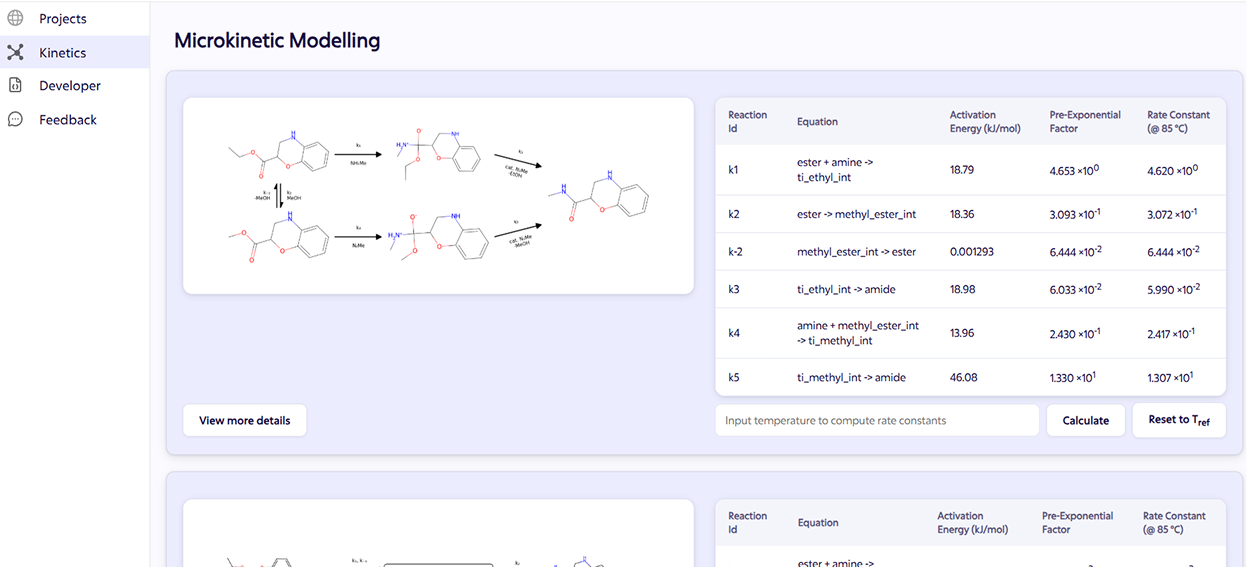
SaaS only
Already have data you wish to visualize and model? Upload your own reaction data and use our platform to visualize response surfaces and fit mechanistic kinetic models with no SOLVE Chemistry data collection required. Each client has a separate secure database hosted in AWS cloud with role-based access control via enterprise-grade authorization. Our API-first FAIR data approach ensures you will also be able to automate all aspects for maximum efficiency.
Findable, Accessible, Interoperable, Reusable.
Instant download from the web app, secure API integration, or use our bidirectional add-in for JMP.
20× faster accurate yield data than traditional HTE; 50× faster mechanistic kinetics; solvent response surfaces in 2 weeks instead of 3 months.
Amidation, dipeptide synthesis, catechol rearrangement, nitration, N-alkylation, Pd-catalysed C–H arylation, N-acylation, SNAr, Pd-catalysed phenol-triflate coupling, Suzuki-Miyaura, surfactant-enabled alkylation, esterification.
Yes, we use MS and NMR to aid in species identification and have on-line ELSD, IR and UV detectors for UHPLC analysis.
Yes, you can see each and every chromatogram from each datapoint.