One unified tech workflow, from planning to models at scale
Explore our tech stack top to bottom, or jump straight to the part you need.

Our automated lab iterates around this cycle to understand your chemistry
↻Run the loop as many times as the chemistry needs
.jpg)
Data Collection
Rapid data collection in our state-of-the-art transient flow lab with gold-standard UHPLC analysis, run automatically by our orchestration software, collecting 100s of data points a day per chemistry.
20×
faster yield data than traditional HTE
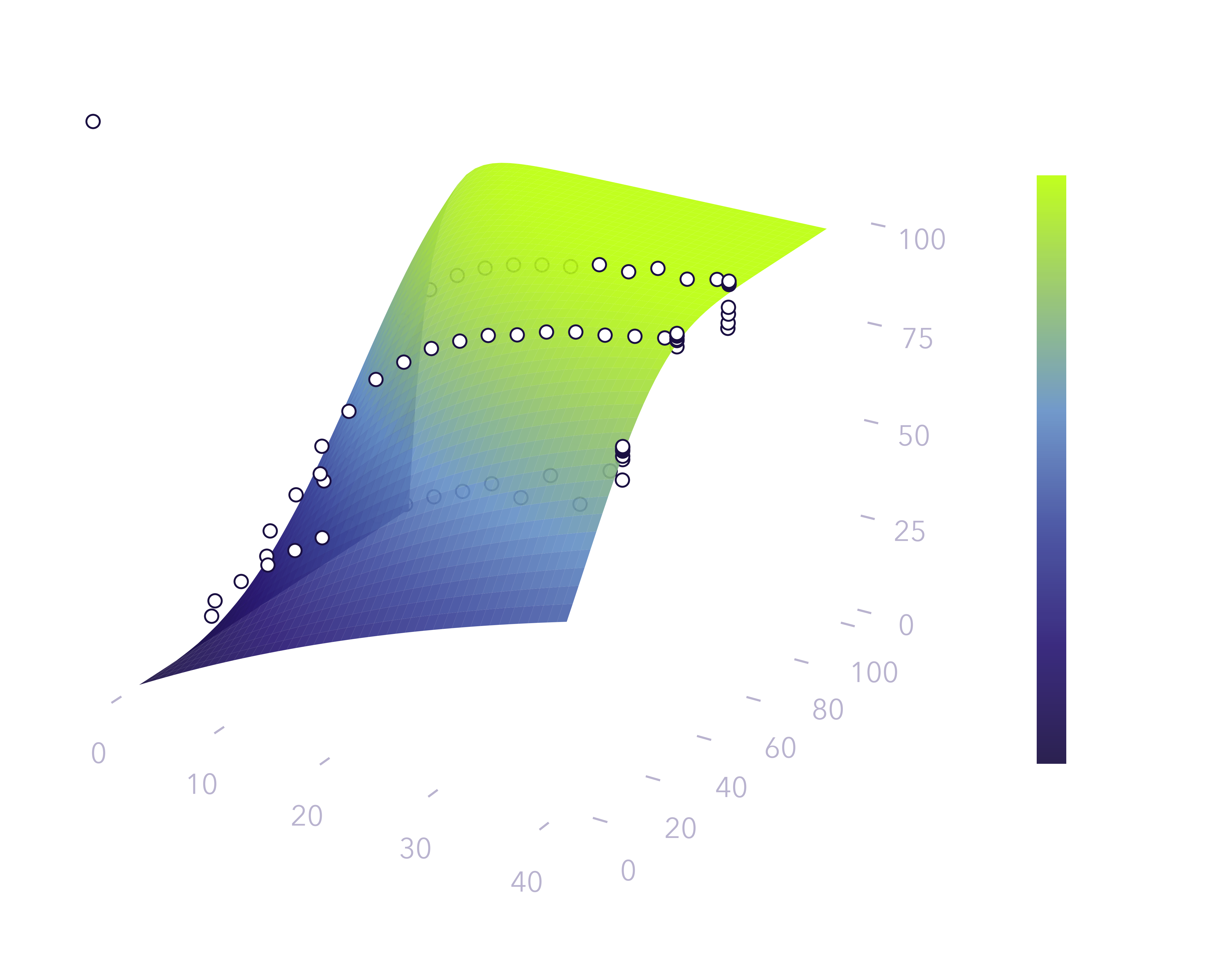
Breadth of Insight
That volume of high-quality data is fed to our automated model fitter pre-trained on our internal computational and experimental data, tuned to your problem. Trade-offs are explored within the continuous design space and campaign goals evaluated.
2 weeks
response surfaces, not 3 months
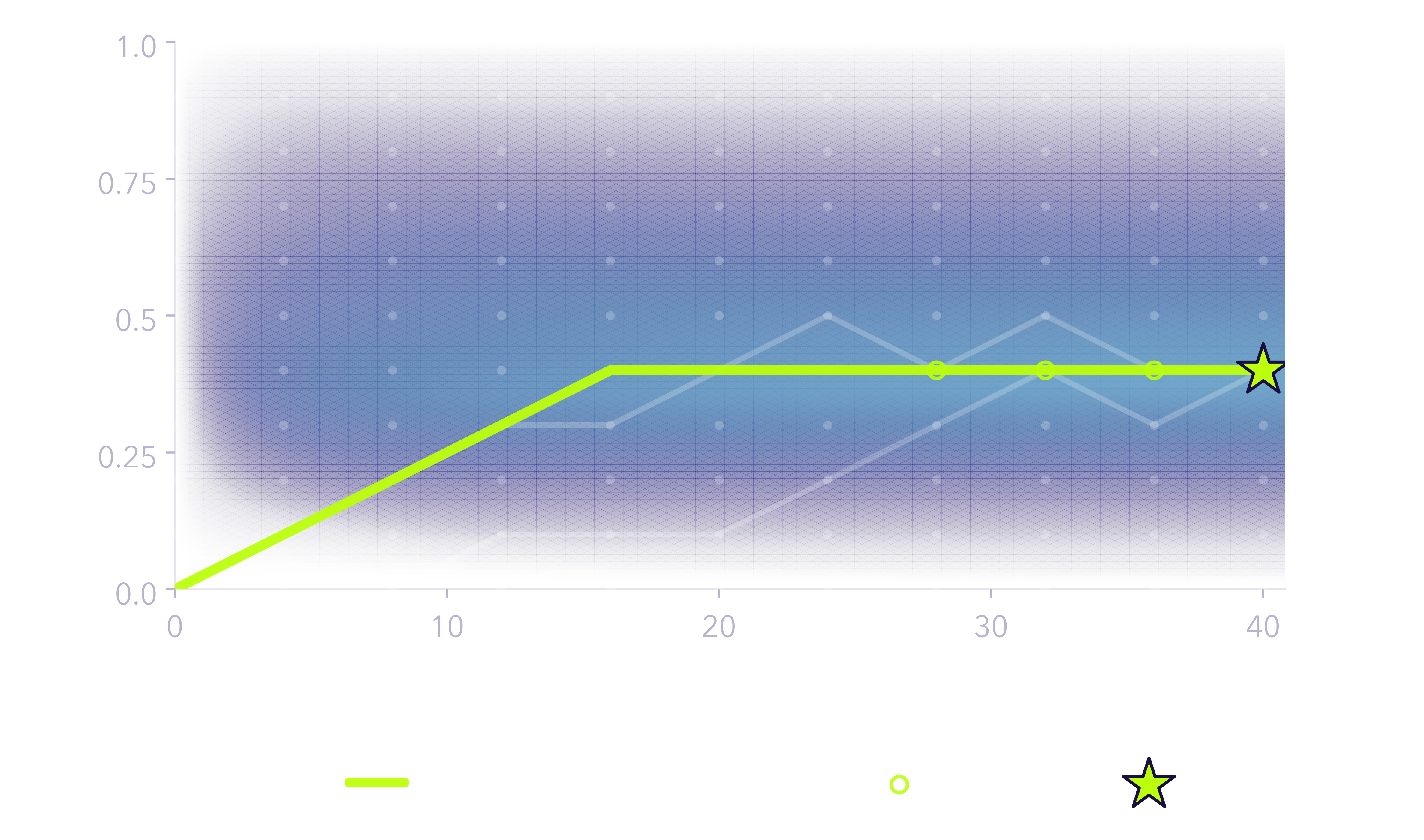
Planning
The next experimental campaign is planned using design of experiments, Bayesian optimization, active learning, and kinetic model discrimination. This ensures the most informative experiments are performed on every iteration.
< half
the experiments, same information
Turn your data into insights
This half can stand on its own. It runs as part of the cycle above, or on data you already have.
.png)
Automatic Mechanistic Kinetic Modeling
Get intrinsic mechanistic kinetic models in hours not days. Our AI-based approach is 50× faster than standard kinetic modelling workflows and more detailed. Our automated workflow searches the space of chemically plausible mechanisms directly: proposes mechanisms, fits them to your data, scores on fit against complexity, and iterates to find the best. At any point, you can provide more information to further steer its discovery or lean on our internal knowledge base. The outcome is elementary steps with quantitative activation energies in a model you can read, share, and justify.
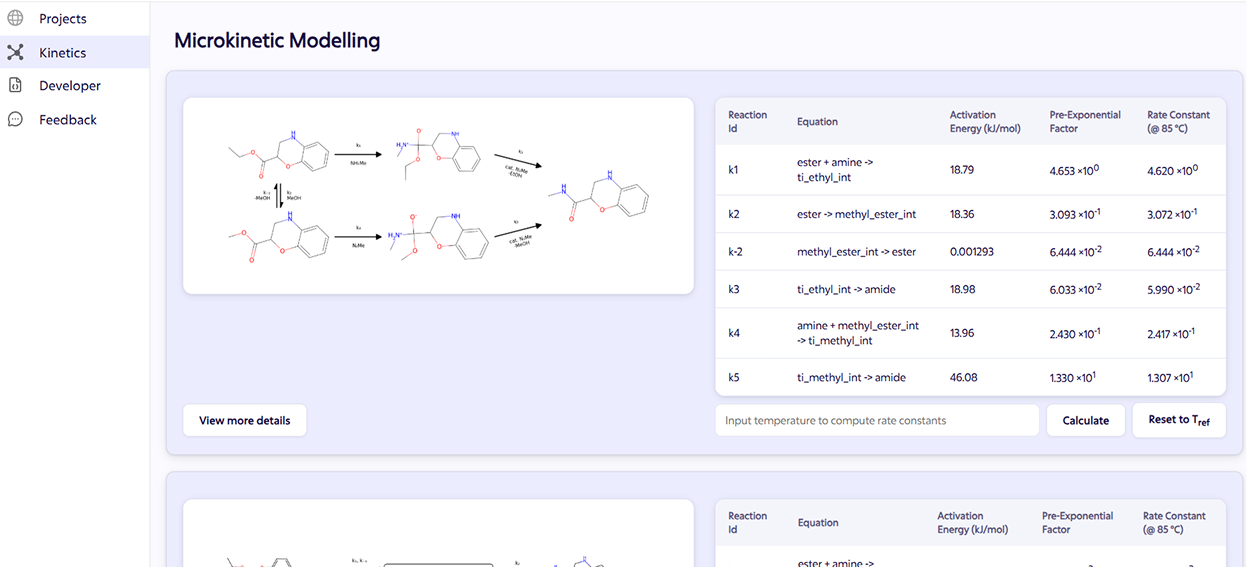
Secure software
If you already have reaction data, upload it to visualize response surfaces and run mechanistic kinetic discovery on your own experiments, with no chemistry performed in our lab. Your data stays yours: every client gets a separate database in our AWS environment, with role-based access control over your organisation. Our software includes native integration into existing tools such as DynoChem, ReactionLab, and JMP. Everything our interface does is also available through our API, on FAIR-structured data, so kinetic modelling sits inside your existing development workflow rather than beside it.
From upload to fitted model
A short walkthrough of the web app using real reaction data. Upload a dataset, visualise the response surfaces, and fit a mechanistic kinetic model, without writing a line of code or waiting on a modelling team.
Findable, Accessible, Interoperable, Reusable.
This is an industrially recognised gold standard for data production and management. These aspirational metrics help machines and humans work together on the same data to speed up digitally transformed workflows.
Instant download from the web app, secure API integration, or use our bidirectional add-in for JMP.
20× faster accurate yield data than traditional HTE; 50× faster mechanistic kinetics; data from chemistry in days not weeks; models from data in hours not days. See our latest papers for examples.
We focus on small organic molecule synthesis. We can handle high temperature/pressure reaction, cryogenic reactions, multiphasic systems, and photochemical systems.
Yes, we use MS and NMR to aid in species identification and have on-line ELSD, RI and UV detectors for UHPLC analysis, as well as on-line FTIR.
Yes, we can share each and every chromatogram from each datapoint.